
Regrade Your Yard for Drainage in Shreveport, LA
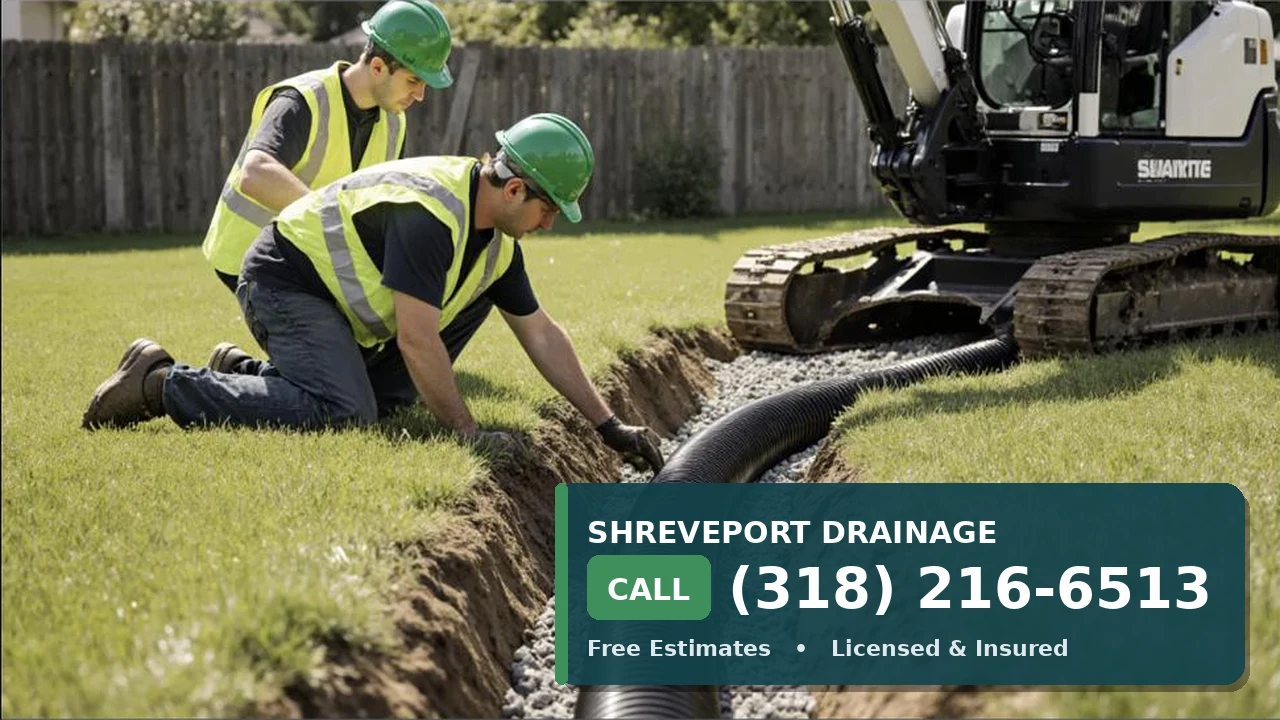
A yard that slopes toward the house. A low spot in the lawn that holds water for days. Ground next to the foundation that has sunk lower than the rest of the lot. Sometimes the fix for drainage is not a pipe, it is the shape of the ground: reshaping the soil so water runs away from the house and toward somewhere it can leave. We regrade yards for drainage in Shreveport and Bossier City, along the house and across the lot, and we tell you straight when a regrade is enough and when you need a drain as well. Call (318) 216-6513 for a free look and a written price.
When regrading is the right fix
The ground slopes toward the house. The most common reason. The lot was finished flat, the soil next to the foundation settled over the years, and now rain runs to the house instead of away from it. Building the grade back up along the house so it falls away for the first ten feet fixes it, and it is often all that side needs.
A low spot holds water and there is room to fill it. If the dip can be filled and shaped to fall toward the edge of the lot, a ditch or a catch basin, the pond goes away without a trench. If there is nowhere for the water to fall to, filling the low spot just moves it, and that is a catch basin job instead.
Water runs across the yard toward the house from a higher lot next door. A shallow swale, a wide gentle dip shaped across the lawn, catches that water and carries it around the house to an outlet. Regrading is how a swale is made.
Not when the lot is dead flat with no outlet. You cannot regrade a fall out of ground that has none. On those lots the answer is a French drain or a sump pump, and we say so on the visit.
How we regrade a yard
Check the levels. A level across the yard tells us where the ground actually falls, which is often not where it looks like it does. We mark the high points, the low points and the outlet.
Move the beds and protect what stays. Plants along the house are lifted; anything that stays in place is fenced off.
Bring in soil and shape it. Along the house, clean fill built up against the foundation and shaped to fall away about six inches over the first ten feet. Across the lot, soil cut from the high side and placed on the low side, or brought in, until the fall runs the right way. Heavy clay is compacted in layers so it does not settle back.
Tie in the downspouts. A regrade along the house is undone the first storm if the downspouts still dump on it, so they are usually piped away at the same time. See downspout drainage.
Sod or seed, and the beds go back. Reshaped lawn is re-sodded or seeded depending on the season. Beds are reset on the new grade.
Along the house is usually one day. A larger area with soil brought in and sod laid is one to three days.
What it costs to regrade a yard in Shreveport
Regrading along the house, the first several feet out from the foundation, usually runs $1,500 to $6,000, depending on how many sides need it and how much soil has to be brought in. Regrading a larger area of the yard is priced by the area and the amount of soil, and it often goes with a French drain or a catch basin that shares the same visit. Every price on the site is on the Shreveport drainage cost page.
Prices on this page are estimates from previous work. We cannot quote an exact price. The actual cost can be lower or higher depending on the job. The person who knows is the professional who will do the work. You get a written quote after we see the house.
Regrade or French drain
Regrade when the problem is the shape of the ground and there is somewhere for the water to fall to. French drain when the ground cannot be reshaped enough, when the water is coming up from below rather than running across the top, or when the lot has no fall at all. A lot of Shreveport yards need both: a regrade along the house to stop water sitting against the foundation, and a drain through the wet part of the lawn to get the rest of it out. The French drain vs yard drain guide explains the difference in more detail, and the on-site visit is where the decision gets made.
How to get started
Call (318) 216-6513 and tell us which way the yard slopes, where the water ends up, and whether it sits against the house or out in the lawn. We book the visit, check the levels, and give you a written price. If you would rather write, use the contact page.
Related services
Regrading questions
How much does it cost to regrade a yard in Shreveport?
Regrading along the house, the first several feet out from the foundation, usually runs $1,500 to $6,000 depending on how many sides and how much soil has to be brought in. Regrading a whole yard to move a low spot or create a fall toward an outlet is priced by the area and the soil needed, and often goes with a French drain or catch basin. You get a written price after someone has checked the levels.
Should I regrade the yard or install a French drain?
Regrade when the problem is the shape of the ground: it slopes toward the house, or a low spot holds water and there is room to fill it and give it a fall. A French drain when the ground cannot be reshaped enough, the lot is too flat for any fall, or the water is coming up from below rather than running across. Many Shreveport yards need a regrade along the house plus a drain through the wet part of the lawn.
How much slope should a yard have away from the house?
About six inches of fall over the first ten feet out from the foundation, and a gentle fall toward an outlet after that. Most Shreveport lots were finished flat, and many have settled so the ground next to the house is lower than the lawn, which is the wrong way round.
What happens to the grass and beds?
Beds along the house are lifted and reset on the new grade. Lawn areas that are reshaped are re-sodded or seeded, depending on the season and what you prefer. A regrade along the house is usually invisible within a few weeks.
How long does regrading take?
Along the house, one day. A larger area with soil brought in and sod laid, one to three days.
Do you regrade yards in Bossier City?
Yes. Shreveport, Bossier City, Haughton, Benton, Blanchard, Greenwood, Stonewall and Keithville. Call (318) 216-6513.
Ready to regrade the yard?
Call (318) 216-6513 for a free look at the levels. Written price, no obligation.